
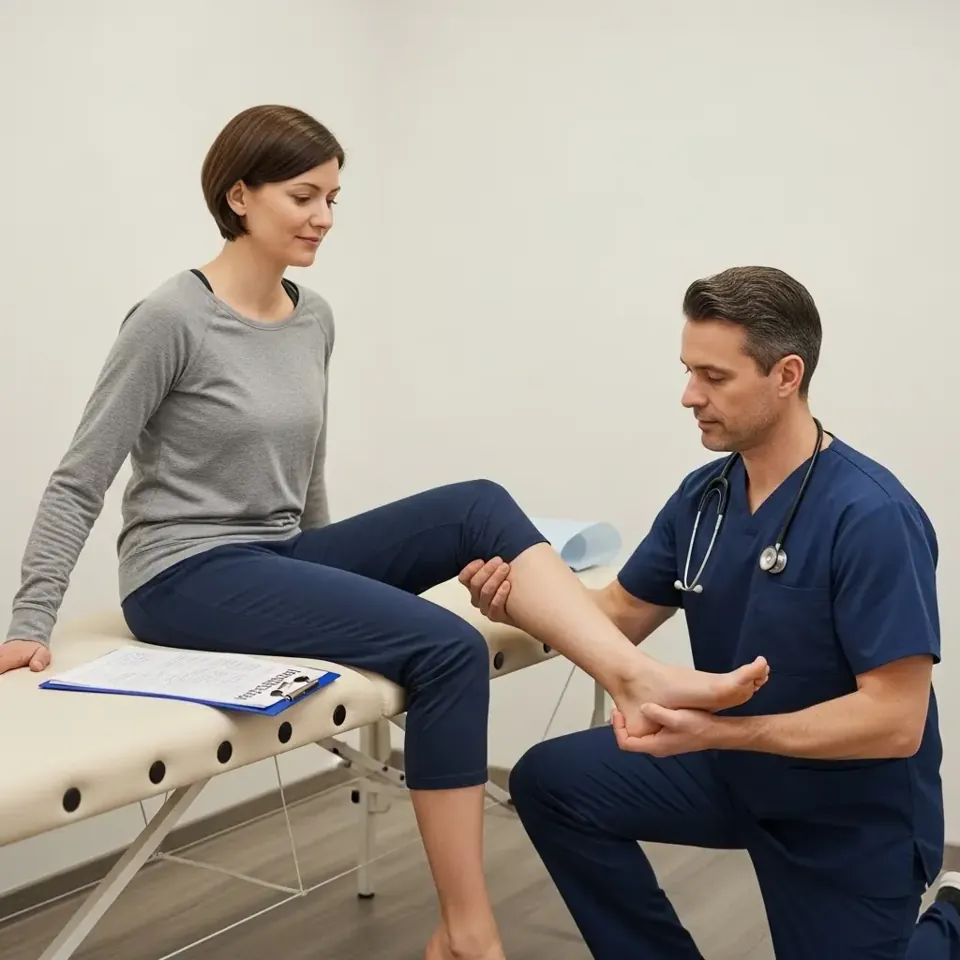
Surgery repairs the problem. Rehabilitation is what gets you moving, working and living normally again. At WellCare Medical in Bradford, post-surgery rehabilitation follows your surgeon's instructions and is adapted to your pain, swelling and goals. Our physiotherapists guide you from the first careful movements through to a confident return to work, driving and sport.
Surgeries we provide rehabilitation for
- knee and hip replacements
- ACL reconstruction and other knee ligament and meniscus surgery
- rotator cuff repair and other shoulder surgery
- spinal surgery, such as discectomy or fusion
- fracture repair in the ankle, wrist, hip or shoulder
- foot, ankle, hand and elbow procedures
The stages of recovery after surgery
- Protect and settle. Managing pain and swelling, gentle movement within the limits your surgeon has set, and safe walking with crutches or a walker if needed.
- Restore movement. Regaining the joint's range with mobilization and stretching, and getting the muscles working again.
- Rebuild strength. Progressive strengthening and balance work, matched to how the repair is healing.
- Return to function. Practising the tasks you need for home, work and sport, with tests that confirm you are ready.
How long each stage lasts depends on the operation, your surgeon's protocol and how your body responds.
Before your operation
If your surgery is planned, a few visits with our physiotherapist or chiropractor beforehand ("prehab") can make recovery easier. You learn the exercises you will need afterwards, build strength, and practise using crutches or a walker.
Your first visit after surgery
Bring your surgeon's instructions, any restrictions you were given and your discharge papers. Your physiotherapist checks the wound area, swelling, movement and strength, and how you are walking and managing at home. They explain what is safe now and what to avoid, and set out the plan for the coming weeks. If anything in the protocol is unclear, we will ask you to confirm it with your surgeon's office before moving on.
When to contact your surgeon or seek urgent care
Call your surgeon, or go to an emergency department, if you have increasing redness, warmth or discharge at the wound, a fever, calf pain or swelling, chest pain or shortness of breath, or a sudden increase in pain or loss of movement.
Related care for recovery after surgery
As you progress, massage therapy can ease tight, guarding muscles, and physiotherapy for joint stiffness addresses lingering stiffness. After knee or ankle ligament surgery, see physiotherapy for tendon and ligament injuries. Older adults often continue with balance and mobility training. For athletes, sports injury physiotherapy covers the final return-to-play stage.
Common questions about post-surgery rehabilitation
When should I start physiotherapy after surgery?
It depends on the operation. After some joint replacements it starts within days. After other procedures there is a period of protection first. Follow your surgeon's guidance, and book ahead so there is no delay.
How long does rehabilitation take?
From about six weeks for simpler procedures to nine months or more after an ACL reconstruction. We give you realistic timelines at your first visit.
Will my insurance cover post-surgery physiotherapy?
Most extended health plans cover physiotherapy up to an annual limit. We bill insurers directly and can tell you what your plan covers. If you have no coverage, see our private billing packages.
Reviewed by the WellCare Medical clinical team, October 2026.
More from Physiotherapy in Bradford
- Physiotherapy in Bradford
- Physiotherapy for Chronic Pain in Bradford
- Physiotherapy for Joint Stiffness & Muscle Tightness in Bradford
- Physiotherapy for Mobility & Balance Issues in Bradford
- Physiotherapy for Postural Problems & Muscle Imbalances in Bradford
- Physiotherapy for Tendon & Ligament Injuries in Bradford
- Physiotherapy for Work-Related Injuries in Bradford
- Sports Injury Treatment in Bradford
- Stroke & Neurological Physiotherapy in Bradford